
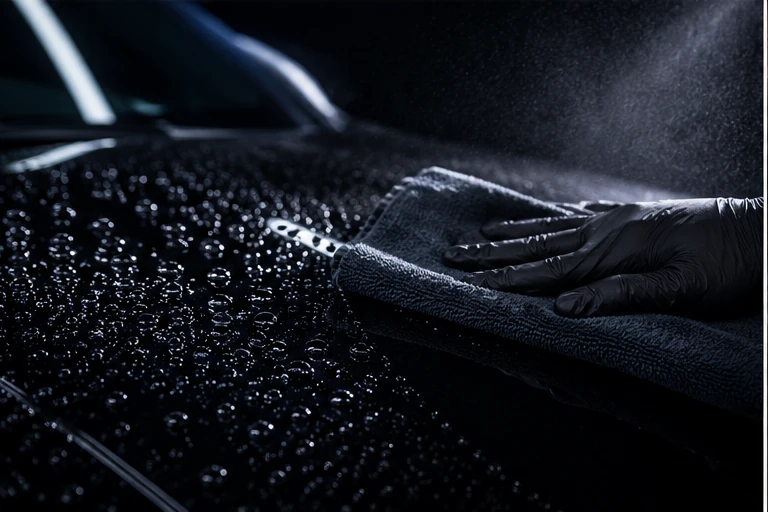
If you are still comparing protection options, start with ceramic coating vs ceramic spray, then use safe washing and swirl prevention habits to maintain the finish.
What ceramic coating maintenance really means
Ceramic coating maintenance means keeping the coating clean, unclogged, and protected from contamination that can reduce slickness and water behavior. A coating can make the vehicle easier to wash and harder for some grime to stick, but it is not a force field. The paint still needs gentle washing, careful drying, and periodic inspection.
The best maintenance routine is consistent rather than aggressive. A properly maintained coating should feel slicker, wash easier, and release water better than unprotected paint. If it is neglected, the top surface can become loaded with minerals, traffic film, iron fallout, tar, sap, or harsh wash residue, making the coating look weak even when the coating underneath is still present.
What a coating does and does not do
A professionally installed ceramic coating such as a System X coating is designed to bond to properly prepared paint and add gloss, slickness, hydrophobic behavior, UV resistance, and chemical resistance compared with bare paint or short-term wax. It helps preserve the finish and makes routine cleaning easier.
It does not make the vehicle self-cleaning. It does not prevent rock chips. It does not stop deep scratches. It does not make bad washing safe. A dirty brush wash, gritty towel, aggressive clay, or careless drying can still mar coated paint.
The first week and first two weeks after coating
The early cure window is when the coating should be treated with the most care. Exact timing depends on the coating system, installation conditions, temperature, humidity, and installer instructions, so the safest rule is to follow the aftercare instructions given at delivery.
- Avoid washing too early unless instructed otherwise.
- Avoid harsh chemicals, strong degreasers, or abrasive towels during the early cure period.
- Avoid parking under trees, sprinklers, or construction dust where possible.
- Remove bird droppings, bugs, sap, or mineral deposits gently and quickly instead of letting them bake in.
- Do not apply random waxes, glazes, or unknown toppers during the cure window.
If contamination lands on the vehicle during the first days, the goal is not to scrub. Use a safe detail spray or coating-safe wash method when appropriate, plenty of lubrication, and minimal pressure.
How often to wash a ceramic-coated car
For a daily-driven vehicle in Mississauga, Oakville, and the GTA, washing every one to three weeks is a realistic maintenance rhythm depending on weather, parking, mileage, and season. In winter, after highway driving, or after the vehicle is exposed to salt, construction dust, pollen, bugs, or tree sap, waiting too long can make the coating harder to clean.
The coating does not need aggressive cleaning every time. It needs safe, regular cleaning before contamination builds up and hardens.
Safe wash method for coated vehicles
A coated vehicle should still be washed from cleanest to dirtiest, top to bottom. Pre-rinse or pre-soak the vehicle first to remove loose grit. Use a pH-neutral or coating-safe shampoo, clean wash media, and light pressure. Wheels, exhaust tips, lower panels, and door jambs should have separate towels or tools.
For a rinseless wash, use enough towels or a dedicated rinseless sponge so dirty media is not dragged repeatedly across the coating. Rinseless can be safe when the car is lightly to moderately dirty and the process uses enough lubrication. If the vehicle is covered in salt crust, mud, or gritty road film, rinse first or book a proper wash.
Best wash products for coated vehicles
The safest maintenance products are coating-safe shampoos, rinseless wash products, soft wash mitts, plush drying towels, and clean microfiber towels dedicated to paint. Harsh all-purpose cleaners, dish soap, strong degreasers, and unknown wash chemicals can reduce slickness, weaken topper layers, or leave residue that interferes with hydrophobic behavior.
A pH-neutral shampoo is not automatically perfect, but it is usually a safer starting point for routine maintenance. Stronger chemicals should be saved for targeted decontamination, not used as the normal wash every week.
Safe drying and how to avoid water spots
Drying matters because minerals in water can leave spots as they evaporate. Wash in shade when possible, avoid hot panels, rinse thoroughly, and dry with clean plush towels or filtered air. Do not let water sit and bake on glass, black trim, mirrors, roof panels, or horizontal paint.
Water spots can still happen on ceramic coatings. A coating may resist some staining better than bare paint, but mineral deposits can still sit on top of the coating. If spots are fresh, they may clean up with a safe wash or approved spot remover. If they are etched or baked in, professional correction or chemical treatment may be needed.
Bird droppings, bugs, sap, pollen, and road film
Coatings buy time, not immunity. Bird droppings, bug splatter, sap, and road film should be removed as soon as practical. Acidic or sticky contamination can stain, etch, or clog the surface if left for too long, especially in sun.
- Soften contamination before wiping.
- Use lubrication, not pressure.
- Never scrape sap or dried bug residue with a fingernail or hard edge.
- Use dedicated chemical treatment when needed, then wash and rinse thoroughly.
- Inspect the area afterward under good light.
Winter salt and ceramic coatings
Winter is where coating maintenance matters most. Salt and brine can sit in lower panels, wheel wells, seams, and door jambs. A touchless rinse or pressure rinse is useful between full washes, but it may not fully remove bonded grime. When possible, follow with a proper contact wash using clean media and safe shampoo.
Do not let winter grime build for a month because the paint is coated. The coating helps, but repeated salt cycles, freeze-thaw residue, and abrasive road film can still make the vehicle harder to clean and easier to mar.
When to use a maintenance topper
A compatible SiO₂ maintenance topper can refresh slickness, gloss, and water behavior when used correctly on a clean surface. A topper does not replace the coating underneath. It sits on top as a sacrificial maintenance layer.
Spray-style protection such as Griot’s Garage 3-in-1 Ceramic Wax can be useful in the right context, but it should not be confused with a professionally installed long-term ceramic coating. The purpose of a topper is maintenance support, not a shortcut around coating prep or installation.
Decontamination: iron remover, tar remover, clay, and caution
If a coated car feels rough, the coating may be contaminated rather than gone. Iron fallout, tar, mineral deposits, overspray, and road film can sit on the surface. Chemical decontamination is usually safer to try before mechanical clay because clay can mar paint if used aggressively or without enough lubrication.
Clay should be treated as a correction-prep tool, not a casual routine step. On a coated vehicle, use the least aggressive method that solves the problem. If the paint is dark, soft, or high value, professional inspection is safer than forcing clay at home.
How to tell if a coating is clogged, weak, or just dirty
Water beading and sheeting can change for several reasons. The coating might be dirty, clogged with road film, covered by soap residue, loaded with minerals, or genuinely wearing down. A proper wash and decontamination can often restore water behavior if the coating is still healthy.
| Symptom | Likely meaning | Next step |
|---|---|---|
| Flat water behavior after a dirty winter | Road film or mineral load | Safe wash, then inspect |
| Rough paint feel | Bonded contamination | Chemical decon before considering clay |
| Good beading in some panels, weak lower doors | Lower-panel contamination | Targeted wash/decon |
| No slickness after proper cleaning | Possible coating wear or heavy clogging | Professional inspection |
Common ceramic coating maintenance mistakes
- Thinking the car is maintenance-free.
- Using automatic brush washes on coated paint.
- Letting bird droppings, sap, bugs, or water spots bake in.
- Using harsh cleaners as a normal wash routine.
- Drying with old or dirty towels.
- Using too little lubrication during rinseless or waterless washing.
- Claying aggressively without understanding the risk of marring.
- Layering random products that leave residue and reduce water behavior.
Maintenance schedule: weekly, monthly, seasonal, annual
| Timing | What to do | Goal |
|---|---|---|
| Weekly or bi-weekly | Safe wash if driven often or exposed to weather | Prevent buildup |
| Monthly | Inspect lower panels, wheels, glass, trim, and water behavior | Catch contamination early |
| Seasonally | Decontamination inspection, topper if needed, winter/summer reset | Restore slickness and protection behavior |
| Annually | Professional coating inspection and maintenance detail | Confirm coating health and correct issues safely |
When to return for professional maintenance
Return for professional maintenance when the vehicle feels rough after washing, water behavior drops sharply, road film will not release, water spots are visible, the coating feels grabby, or the paint is dark and you are worried about marring it with DIY decontamination.
A professional maintenance service can safely wash, inspect, chemically decontaminate where needed, refresh the topper layer, and identify whether the issue is contamination, poor washing residue, coating wear, or paint damage.
Final ceramic coating maintenance checklist
- Wash regularly with coating-safe products.
- Use clean mitts and towels dedicated to paint.
- Dry before minerals bake onto the surface.
- Remove bugs, sap, bird droppings, and salt quickly.
- Use toppers only on clean paint and only when appropriate.
- Avoid aggressive clay unless necessary.
- Do not expect scratch-proof or self-cleaning paint.
- Book professional maintenance when the coating feels clogged, rough, or weak.