
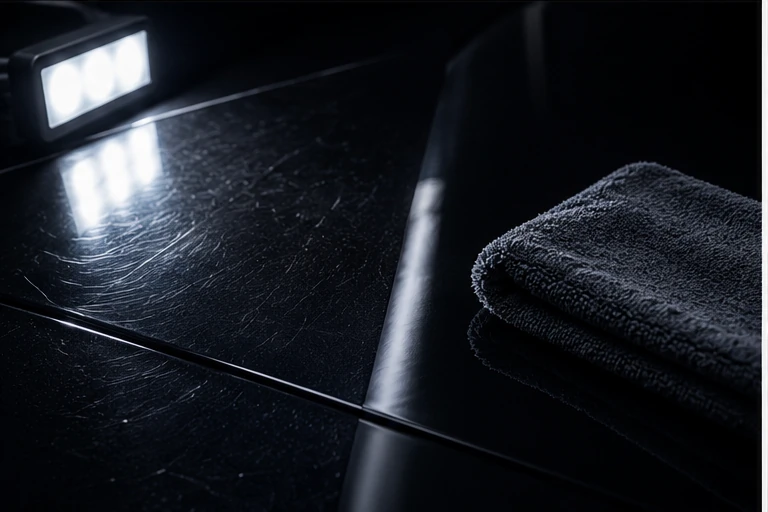
The best prevention plan combines safe washing, realistic knowledge of paint correction, and proper ceramic coating maintenance if the vehicle is protected.
What swirl marks actually are
Swirl marks are very fine defects in the clear coat that scatter light. Under sun or strong inspection lighting, they often look like circular spiderweb marks around the reflection of the light source.
They are usually not deep gouges. Most are light marring from repeated contact with dirty towels, wash mitts, brushes, drying towels, or dust being dragged across the paint.
Swirls vs scratches vs marring vs haze
Swirls are usually shallow, repeating wash marks. Scratches can be isolated lines and may be deeper. Marring is light surface damage from friction, and haze is a dull look that can come from poor polishing, aggressive wiping, or soft paint reacting badly to the wrong pad or towel.
The right repair depends on severity. Some marks polish out. Some can only be improved. Deep scratches through the clear coat cannot be safely removed by normal paint correction.
Why swirls show more on black and dark paint
Black and dark paint do not automatically scratch more easily, but they reveal defects more clearly because the reflection is sharper and the contrast is higher. A light haze that barely shows on silver can look obvious on black.
Soft paint can also show towel marks and micro-marring faster, so the process has to be adjusted to the paint, not just the vehicle colour.
The biggest cause: dirty contact with paint
Most swirl prevention comes down to one idea: reduce dirty contact. Dirt, salt, brake dust, grit, and road film become abrasive when they are pushed across the paint.
A safe wash uses lubrication, clean wash media, low pressure from your hand, and frequent rinsing or towel rotation. Paint should be cleaned by chemistry and lubrication, not by scrubbing harder.
Why automatic brush washes can create swirls
Automatic brush washes are convenient, but the brushes can carry dirt from vehicle to vehicle. When that dirty material hits your paint, it can create marring and swirl marks.
Touchless washes reduce contact risk, but they often rely on stronger chemicals and may not fully remove bonded grime. They are useful in winter, but they are not the same as a careful hand wash.
Why wiping dust off dry is risky
One of the fastest ways to mar paint is wiping dust with a dry towel, sleeve, duster, or dirty microfiber. Dust is still contamination. If there is no lubrication, the towel can drag that contamination across the clear coat.
Use a proper wash, rinseless wash, or detail spray only when the vehicle is lightly dusty and the towel is clean. If the car has grit, salt, mud, or road film, do not quick-wipe it.
Why drying technique matters
Drying is a major scratch-risk step because the car may still have small particles left on the surface. Dragging a towel aggressively over the paint can create defects even after a wash.
Use soft, clean drying towels, blot or gently glide where possible, and consider a drying aid to add lubrication. A blower can reduce towel contact around mirrors, trim, emblems, and tight areas.
The safe-wash mindset: lubrication, clean media, low pressure
A paint-safe wash is not about speed. It is about controlling friction. Good shampoo, clean mitts, clean towels, and gentle pressure matter more than scrubbing power.
Work in sections. Rinse the mitt often. If the mitt hits a dirty lower panel or the ground, do not put it back on the paint until it is properly cleaned.
Pre-rinse and pre-soak
A pre-rinse removes loose grit before contact washing. A pre-soak gives chemicals time to soften dirt, bugs, salt, and road film so less pressure is needed during the contact step.
This step is especially important on winter-driven vehicles in Mississauga, Oakville, and the GTA because salt and grit collect on lower panels, rockers, bumpers, and behind wheels.
Foam pre-wash and what it does
Foam is not magic, but it can help hold cleaning solution on the vehicle longer and loosen surface dirt before you touch the paint. It also helps you see coverage and dwell time.
Foam still needs to be rinsed away before the contact wash. Do not let chemicals dry on the surface, especially in sun or wind.
Two-bucket method and grit control
The two-bucket method uses one bucket for wash solution and one bucket for rinsing the mitt. The goal is to release dirt before the mitt goes back into clean soap. Grit guards can help keep heavier debris lower in the bucket.
This method reduces risk, but it only works if you actually rinse the mitt often and avoid grinding the mitt into dirty panels.
Rinseless wash safety when done correctly
A rinseless wash can be safe when the vehicle is not heavily dirty and the process uses enough product, enough towels, and careful towel rotation. The solution encapsulates light dirt so it can be lifted with less risk.
Rinseless washing is not an excuse to wipe a gritty winter vehicle with one towel. If the vehicle has heavy salt, mud, or sand, rinse first or book a proper wash/detail.
Why waterless wash is only for very light dust
Waterless wash has the highest risk if used on the wrong vehicle. It should only be used on very light dust, fingerprints, or fresh bird droppings after proper lubrication.
Do not use waterless wash on salt film, muddy lower panels, sandy paint, or vehicles that have not been washed in weeks.
The right wash mitts and towels
Use soft wash mitts and high-quality microfiber towels designed for automotive paint. Cheap towels, old bath towels, and rough rags can mar the finish.
Towels should be clean, dedicated, and sorted by job. A towel used on wheels, jambs, exhaust tips, or greasy areas should not touch paint.
Why separate wheel and lower-panel towels matter
Wheels, tires, lower doors, rocker panels, and rear bumpers collect the dirtiest contamination. Brake dust and road grit are abrasive.
Use separate brushes, mitts, buckets, and towels for these areas. Mixing wheel tools with paint tools is one of the easiest ways to create defects.
How to wash from top to bottom
Wash the cleanest areas first and the dirtiest areas last. Usually that means roof, glass, upper panels, middle panels, then lower panels and bumpers.
This reduces the chance of dragging heavy contamination upward onto cleaner paint.
Safe drying methods
A soft drying towel, drying aid, and light pressure are the safest simple combination. Lay the towel down gently, pull it lightly, or blot water where practical.
A blower helps remove water from mirrors, grilles, trim gaps, badges, door handles, and wheels. Less towel contact means less chance of marring.
Why dirty microfiber can scratch
Microfiber is only safe when it is clean and cared for properly. A good towel full of grit becomes sandpaper. Towels should be washed separately from cotton, work clothes, and dirty shop towels.
Avoid fabric softener because it can reduce absorbency and leave residue. Retire towels from paint duty once they feel rough, contaminated, stained, or questionable.
Common household items that damage paint
Gas station squeegees, paper towels, old bath towels, snow brushes, dirty rags, kitchen sponges, and shirt sleeves can all damage paint. They are not designed for delicate clear coat.
Even a snow brush should be used carefully. Removing heavy snow is fine, but grinding the bristles directly against paint can create winter marring.
Winter-specific swirl risks
Winter adds salt, sand, slush, and road grit. The vehicle may look wet rather than dirty, but the film on the paint can be abrasive.
Touchless washes can help remove salt between proper details, but lower panels and bonded grime may still need careful hand washing or decontamination.
How ceramic coating, wax, or sealant helps
Ceramic coating, wax, or sealant can add slickness and make the vehicle easier to wash. Professional ceramic coatings, compatible SiO₂ sealants, and products such as Griot’s Garage 3-in-1 Ceramic Wax can support safer maintenance when used correctly.
Protection does not make paint scratch-proof. Poor washing can still damage coated, waxed, or sealed paint.
When paint protection film helps
Paint protection film can help protect high-impact areas from road rash, chips, and some light abrasion. It is especially useful on front bumpers, hoods, fenders, mirrors, and rocker areas.
PPF is not invisible armor against every type of damage, but it can be a smart layer for vehicles that see highway driving or winter road debris.
When paint correction is needed
Once swirls are already in the paint, prevention will not remove them. Paint correction can improve or reduce defects by carefully polishing the clear coat with the least aggressive effective method.
The Auto Edit uses a ShineMate EP830 rotary polishing system with professional compounds, polishes, and pads selected for the paint type, condition, thickness, and defect depth.
The Auto Edit recommendation
For most owners, the best plan is simple: avoid brush washes, do not dry-wipe dust, use clean paint-only towels, wash from top to bottom, and keep protection on the paint.
If the finish is already swirled, correct it first, then maintain it properly. Prevention after correction is what keeps the vehicle looking sharp longer.
Final swirl-prevention checklist
Pre-rinse before touching paint. Use lubrication. Keep wheel tools separate. Wash top to bottom. Avoid dry wiping. Use clean microfiber. Dry gently. Do not use household towels or gas station squeegees.
If the vehicle is gritty, salty, or neglected, do not quick-wipe it. Book a proper wash, maintenance service, or detail before damage builds up.