
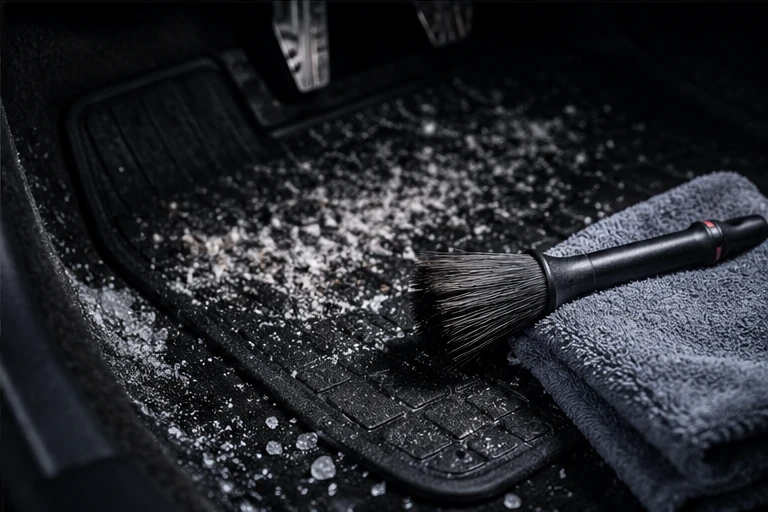
Winter care is easier when you combine safe washing, smart pre-detail preparation, and swirl prevention during salt season.
Why winter salt is a problem
Winter salt is useful for road safety, but it is harsh on vehicles. It gets tracked into carpets and mats, dries into white crust, and collects on lower panels, wheel wells, jambs, wheels, and underbody areas.
In Mississauga, Oakville, and the GTA, winter vehicles often deal with repeated freeze-thaw cycles. That means salt, slush, and moisture can build up quickly if the car is not maintained through the season.
Interior salt vs exterior salt
Interior salt is usually carried in on shoes and boots. It lands in footwells, under pedals, near seat rails, on mats, and in cargo areas. Exterior salt collects on the paint, lower panels, undercarriage, suspension areas, wheels, and door jambs.
Both matter. Interior salt can stain and stiffen carpets. Exterior salt can accelerate corrosion and make winter grime harder to wash away.
Why salt stains turn white and crusty
Salt stains look white and crusty because minerals remain after moisture evaporates. The residue can bond into carpet fibers and harden over time.
Once salt has been stepped on, dried, re-wet, and dried again, it becomes much harder to remove cleanly. That is why prevention beats waiting until spring.
Why vacuuming alone usually does not remove salt
Vacuuming helps remove dry debris, sand, and loose crystals, but hardened salt usually needs moisture, cleaning chemistry, agitation, and sometimes extraction.
If salt has dissolved into the carpet and dried again, a vacuum cannot pull it all out. It may lighten the area, but the crust often returns when the carpet dries.
Why prevention is easier than removal
Preventing salt from reaching the carpet is easier, safer, and cheaper than removing heavy stains later. Once salt has soaked into fibers and backing, cleaning becomes slower and less predictable.
The goal is to trap winter mess in removable mats, remove moisture early, and keep footwells from becoming a salt reservoir.
Use proper all-weather floor mats
All-weather rubber or thermoplastic mats are one of the best winter upgrades. They catch slush and salt before it reaches the carpet. Carpet mats alone are usually not enough for GTA winters.
Choose mats that fit properly, do not interfere with pedals, and cover the main footwell area. A poor-fitting mat can move around and become a safety issue.
Why raised-edge mats matter
Raised-edge mats hold melted snow and salty water inside the mat instead of letting it run onto the carpet. Flat mats can still allow liquid to spill over the sides.
For family vehicles, work vehicles, rideshare vehicles, and winter commuters, raised edges make a big difference because passengers track in salt repeatedly.
Remove snow from shoes before entering
Knock heavy snow and slush off your shoes before getting in. It sounds simple, but it reduces the amount of water and salt entering the cabin.
If you carry passengers often, especially kids, this habit helps keep rear footwells and seat rails cleaner through winter.
Keep a small winter interior kit
A small winter kit can include a towel for wet mats, a soft brush, a small trash bag, and spare microfiber. This lets you remove moisture before it soaks into the vehicle.
Do not soak the carpet with random cleaners. The goal is prevention and light maintenance, not turning the interior into a wet environment that can create odor or mildew.
Weekly winter interior reset
Once a week, remove mats, shake them out, vacuum loose debris, and wipe up standing water. Check front footwells, rear footwells, pedals, seat tracks, and the cargo area.
Frequent small resets stop salt from building into thick crust. This is especially useful for daily drivers and vehicles parked outside.
Cleaning rubber mats properly
Remove rubber mats from the vehicle before washing them. Rinse salt away, use a suitable cleaner, brush if needed, rinse again, and let them dry before reinstalling.
Do not put soaking wet mats back onto carpet. Trapped moisture can create smells and make salt staining worse.
When carpet starts showing salt
If carpet begins showing white marks, deal with it early. Light salt is easier to treat than old, repeated buildup.
Avoid grinding the salt deeper with aggressive dry scrubbing. First remove loose debris, then use the right cleaning process for the material and severity.
Why waiting until spring makes salt harder to remove
Many owners wait until spring, but by then salt may have been dissolved, dried, stepped on, and reactivated many times. That makes it more stubborn.
A mid-winter interior reset can prevent a heavy spring restoration job. It also keeps the cabin looking and smelling better during the season.
Salt stain removal basics
Salt removal usually involves loosening the mineral buildup, controlled cleaning, agitation, and extraction or careful drying. The process should remove residue without overwetting the carpet.
Some older salt stains, dye changes, stiff carpet, and long-term mineral residue may not fully disappear. Honest expectations matter.
Why extraction may be needed
Heated extraction can help flush dissolved residue from carpet and fabric after the salt has been broken down. This is useful when salt is embedded below the surface.
Extraction still has to be controlled. Too much moisture, poor drying, or repeated soaking can create odor and mildew risk.
Why aggressive scrubbing can damage carpet fibers
Aggressive scrubbing can fuzz, distort, or damage carpet fibers. It can also spread residue instead of removing it.
A professional process uses the right cleaner, controlled agitation, extraction where needed, and drying. Products such as P&S Carpet Bomber may support fabric and carpet cleaning where appropriate.
Protecting trunk and cargo areas
Winter salt does not only hit front footwells. Strollers, hockey bags, work boots, tools, groceries, and snow brushes can bring salt into the trunk or cargo area.
Cargo liners and regular vacuuming help keep winter grime from spreading into seams and side panels.
Family vehicles, work vehicles and winter commuters
Vehicles used for commuting, job sites, kids, pets, or rideshare often need more frequent winter maintenance. The more passengers and stops, the more salt gets tracked inside.
These vehicles benefit from all-weather mats, regular interior resets, and not waiting until the end of winter for the first cleaning.
Exterior winter salt protection
Exterior salt collects on lower doors, rocker panels, bumpers, wheel arches, license plate areas, wheels, and door jambs. These areas should be rinsed and washed regularly through winter.
Door jambs are often overlooked. Salt and grit can sit around seals, hinges, and lower jamb areas even when the outside looks clean.
Undercarriage rinsing
An undercarriage rinse can help remove salt from hidden areas where corrosion risk is higher. It is especially useful after heavy salting or highway driving.
Undercarriage rinsing does not replace a full wash, but it is a helpful winter maintenance habit when available.
Why touchless washes help but do not solve everything
Touchless washes can be useful in winter because they remove salt without brush contact. They are a good option when it is too cold for a proper hand wash.
However, touchless washes may not remove bonded grime, film, or contamination from lower panels. A proper detail or decontamination may still be needed.
Winter washing frequency
There is no perfect schedule, but winter vehicles should not go months without washing. After heavy salt exposure, a rinse or wash is better than letting salt sit.
Wash during warmer windows when possible, and avoid letting water freeze in locks, mirrors, handles, and seals.
Wax, sealant, ceramic spray, ceramic coating and how protection helps
Protection helps make winter washing easier. Wax, sealant, ceramic spray, and true ceramic coating can add slickness and reduce how strongly grime sticks.
Products such as an SiO₂ sealant or Griot’s Garage 3-in-1 Ceramic Wax can support exterior protection, while a professionally installed ceramic coating can make maintenance easier. None of them make the vehicle salt-proof.
Door jambs and weather stripping
Door jambs, lower seals, and weather stripping collect salty water and grit. Wipe these areas carefully during winter maintenance so buildup does not sit for months.
Avoid harsh products on rubber seals. The goal is safe cleaning and drying, not aggressive chemical use.
Wheels, brake dust and salt
Wheels deal with brake dust, salt, and road grime at the same time. That combination can be stubborn and corrosive if neglected.
Regular wheel cleaning helps preserve the finish. Avoid using the same towels or brushes on wheels and paint.
What not to do with salt stains
Do not dump excessive water into the carpet. Do not aggressively scrub until fibers fray. Do not use random household chemicals. Do not assume white marks are gone until the carpet is fully dry.
Salt can reappear after drying if residue remains below the surface. Controlled cleaning and proper drying are the key.
When to book a professional salt stain service
Book professional help when salt is heavy, repeated, crusted, returning after DIY cleaning, or spread into carpets, mats, seat rails, and trunk areas.
A professional interior service can combine vacuuming, chemical treatment, agitation, extraction, and drying more safely than repeated at-home soaking.
The Auto Edit winter recommendation
For GTA winter vehicles, The Auto Edit recommends prevention first: proper mats, weekly resets, regular exterior rinsing, and early salt treatment.
If salt has already hardened into the carpet or mats, a detail or targeted salt stain service is the safer path than heavy DIY scrubbing.
Final winter salt prevention checklist
Use raised-edge mats. Knock snow from shoes. Remove wet mats when possible. Vacuum weekly. Treat early salt before it hardens. Rinse lower panels, wheel wells, jambs, and undercarriage areas.
Do not wait until spring if the vehicle is already crusted with salt. Prevention and early maintenance are easier than restoration.